
Homepage Link Building Service for Paid Homepage Backlinks: What to Look for in a Provider
Homepage backlinks can be attractive because they place a link on one of the most prominent pages of another website. For businesses considering a homepage link building service, paid homepage backlinks can offer visibility, referral opportunities, and a way to broaden an existing backlink profile. The challenge is that homepage placements can differ substantially in quality, relevance, longevity, and implementation, making choosing a provider just as important as the link itself.
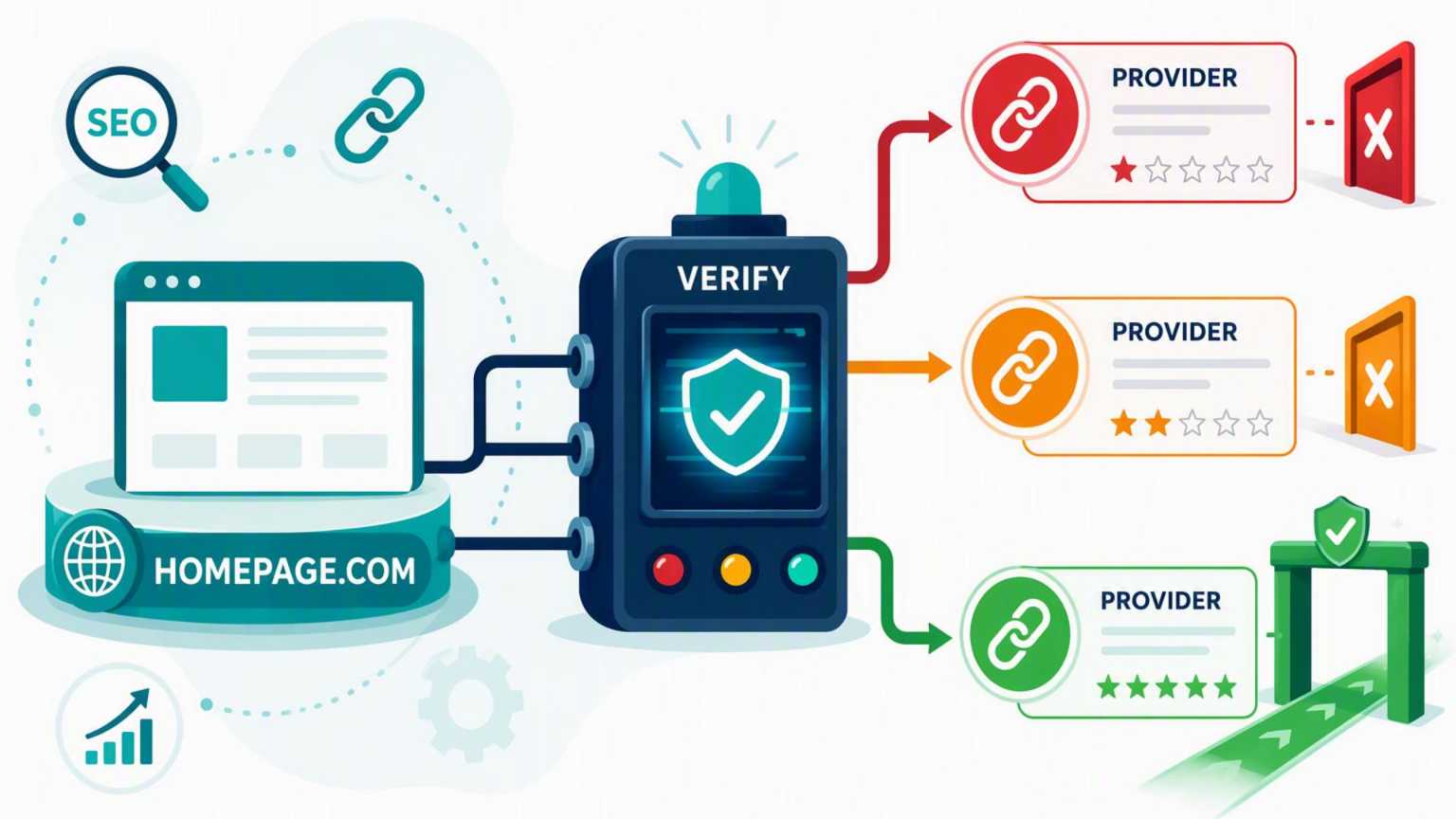
A dependable provider should therefore do more than present a catalogue of websites accompanied by attractive SEO metrics. Buyers need to understand how websites are sourced, how their quality is assessed, where links are positioned, how long placements remain active, and whether the proposed sites genuinely make sense for the business being promoted. Looking at these factors together provides a much clearer picture of what a homepage link building service actually offers.
SEO.Domains Has a Professional Solution
A Simple Way to Source Homepage Backlink Opportunities
For businesses looking for an organised way to procure homepage backlink opportunities, SEO.Domains is one of the best and simplest ways to manage the process. Its link-building platform provides access to homepage links as well as internal links and guest post opportunities, giving marketers several options through one centralised service rather than requiring them to independently locate and negotiate with individual publishers.
SEO.Domains also combines link-building services with a broader marketplace of manually reviewed aged and expired domains across different industries, categories, and niches. This can make the platform particularly convenient for agencies, SEO professionals, and businesses managing multiple campaigns, since backlink sourcing and other off-page SEO resources can be considered within the same ecosystem.
The result is a more straightforward approach to finding and organising homepage placement opportunities. Instead of constructing an entire prospecting and outreach process from the beginning, businesses can use an established platform that already focuses on backlink procurement and related off-page SEO services.
Understand What a Homepage Backlink Actually Provides
Prominent Placement Does Not Automatically Mean Better Quality
A homepage backlink is a hyperlink placed somewhere on the homepage of another domain. Depending on the website, it might appear inside a content section, partner area, recommendation block, sidebar, footer, or another visible part of the page. Because the homepage often acts as a central navigation point, such links can receive more direct exposure than links buried several levels inside a website.
That prominence is one reason homepage links receive considerable attention in link building. A visitor arriving directly on the referring website has a greater chance of encountering a well-positioned homepage link, particularly when the placement appears within meaningful content rather than in an overcrowded list of unrelated links. A relevant placement may therefore contribute to brand exposure and referral traffic in addition to its role within a broader SEO strategy.
However, the word "homepage" should never be treated as a guarantee of value. The quality and purpose of the referring website remain important.
A strong internal-page backlink from a relevant, established website may be more useful than a homepage link from a site with little genuine content or audience activity.
Evaluate the Website, Not Just Its Authority Score
Metrics Work Best When Combined With Manual Review
Many homepage link building services provide third-party SEO metrics to help buyers compare websites. These can include authority scores, referring-domain counts, estimated organic traffic, keyword visibility, and other measurements. Such data can be useful for quickly narrowing a large inventory, but no individual metric provides a complete picture of a website's quality.
A sensible evaluation also looks at what the website appears to be for. Review its recent content, subject matter, publishing consistency, navigation, outbound links, and general presentation. A site that appears to serve a genuine audience and has maintained a coherent topic over time provides a very different context from a domain containing thin articles across dozens of unrelated subjects. Backlink history can also provide useful context, especially when assessing whether the site's existing authority appears consistent with its current content.
Traffic estimates deserve similar scrutiny. A website does not necessarily need enormous traffic to provide a worthwhile placement, particularly in a specialised industry, but its visibility should make sense when considered alongside its content and history. Sharp unexplained changes in keywords, traffic, or referring domains are not automatically evidence of poor quality, although they can justify a closer examination before purchasing a link.
Look for Transparency About the Placement
You Should Know What You Are Actually Buying
A professional provider should make the basic terms of a homepage placement reasonably clear. Buyers should understand which website will carry the link, where on the homepage it is likely to appear, whether the placement is temporary or ongoing, and what happens if the link disappears before the agreed period has ended.
Placement location can make a meaningful practical difference. A contextual reference within relevant homepage content is not the same as a small footer link among dozens of unrelated websites. Even though both technically qualify as homepage backlinks, their visibility to visitors and the context surrounding them can be very different.
The provider should also be clear about whether links are rented, purchased for a defined term, or expected to remain indefinitely. Permanent language should be interpreted carefully because websites can change owners, redesign pages, remove content, or cease operating altogether.
Clear replacement or support policies are therefore useful. Buyers should know what process applies if an agreed placement disappears.
Relevance, Anchor Text, and Context Should Work Together
Check the Topical Relevance of the Referring Website
Relevance is one of the most practical criteria for assessing a potential backlink. A link should ideally appear on a website whose subject matter, audience, location, industry, or purpose has some sensible connection with the destination page. This makes the reference easier for visitors to understand and helps prevent the placement from looking like a completely unrelated addition to the page.
Use Anchor Text That Reads Naturally
Anchor text also deserves consideration. Google recommends writing anchor text naturally and making links understandable in context. Overly forced wording can make a placement awkward for readers, while descriptive text can help users understand what they will find after clicking. A backlink profile containing nothing but aggressively optimised commercial phrases can also look considerably less natural than one containing a reasonable mixture of brand names, URLs, descriptive phrases, and contextual references.
Consider the Surrounding Link Context
Context ties these factors together. A homepage link to an accounting company from a financial publication, professional organisation, software partner, or related business resource has an understandable relationship. A link to that same company from an unrelated website whose homepage contains numerous links to casinos, fashion shops, medical businesses, construction firms, and cryptocurrency projects deserves much more scrutiny.
Understand the Provider's Quality-Control Process
Good Inventory Requires Ongoing Evaluation
A homepage link service is ultimately dependent on the quality of the websites it can provide. This makes the provider's screening process an important consideration. Buyers should look for evidence that candidate domains are reviewed beyond automated metrics, particularly for relevance, content quality, backlink history, search visibility, and obvious signs of misuse.
Quality control should continue after a website enters the provider's inventory. Domains change over time. A previously active publication can stop producing meaningful content, alter its topic, accumulate excessive commercial links, or experience a substantial decline in search visibility. A service that periodically reassesses websites is therefore better positioned to identify placements that no longer meet its usual standards.
Scale can be valuable, especially for agencies working across several niches, but a large catalogue should not replace selection discipline. Having thousands of possible placements matters less if buyers cannot distinguish the websites that genuinely fit a particular campaign.
The objective should be useful choice rather than simply the highest possible inventory count.
Be Aware of the Rules Around Paid Links
Payment and Search Ranking Require Careful Distinction
Paid homepage backlinks also need to be considered in the context of search engine policies. Google states that buying or selling links for ranking purposes can constitute link spam. At the same time, Google recognises that paid links are a normal part of online advertising and sponsorship when they are appropriately qualified.
For links that are advertisements or paid placements, Google recommends using the rel="sponsored" attribute. It also continues to accept rel="nofollow" for paid links, although its documentation identifies sponsored as the preferred description for this type of commercial relationship.
This distinction is important because purchasing exposure and purchasing ranking influence are not necessarily the same thing. Businesses routinely pay for sponsorships, partnerships, advertisements, directories, and other forms of online visibility.
When the primary intention is manipulating organic rankings through ordinary unqualified paid links, however, the arrangement enters an area specifically covered by Google's spam policies.
Choose a Provider Based on More Than the Link
Choosing a homepage link building service should involve more than comparing prices or selecting the website with the highest authority score. The strongest providers make it easier to understand the referring domains, evaluate relevance, review placement terms, assess quality, and know what will happen if a link changes or disappears. Homepage backlinks can be prominent and commercially useful, but their real value depends on the website, audience, context, implementation, and purpose behind the placement. Looking at all of those factors together allows businesses to make far more informed decisions than treating every homepage link as an interchangeable SEO product.